
Stained glass and mosaic art are two of the most enduring and visually captivating art forms in human history. Both have evolved over millennia, serving religious, decorative, and functional purposes. Their intricate designs and vibrant colors continue to inspire artists and designers worldwide.

The origins of stained glass can be traced back to ancient civilizations. Early examples include small colored glass objects produced by the Egyptians and Romans. However, stained glass as an architectural art form flourished during the medieval period, particularly between the 12th and 15th centuries. Gothic cathedrals across Europe, such as Chartres and Notre-Dame, featured expansive stained-glass windows that depicted biblical narratives and saints, serving both aesthetic and didactic functions. The interplay of light through colored glass created a transcendent atmosphere within these sacred spaces.
Mosaic art predates stained glass, with its earliest known examples dating to the 3rd millennium BCE in Mesopotamia. These ancient mosaics utilized materials like stones, shells, and ivory to create decorative patterns. The art form reached its zenith during the Roman and Byzantine eras, adorning floors, walls, and ceilings of public buildings and private residences. Notable examples include the intricate floor mosaics of Roman villas and the shimmering gold mosaics of Byzantine churches, which often depicted religious scenes and figures.
Traditional stained glass involves assembling pieces of colored glass, often held together by lead cames, to form images or patterns. Artists would paint details onto the glass using vitreous paints before firing them in a kiln to fuse the paint to the glass surface. This technique allowed for greater detail and realism in the depictions.
Mosaics are created by arranging small pieces, known as tesserae, made from materials such as stone, glass, ceramic, or even precious metals, into a cohesive design. These tesserae are set into a substrate with mortar or adhesive. Various laying techniques, like opus tessellatum or opus vermiculatum, determine the flow and texture of the mosaic, influencing how light and shadow play across the surface.
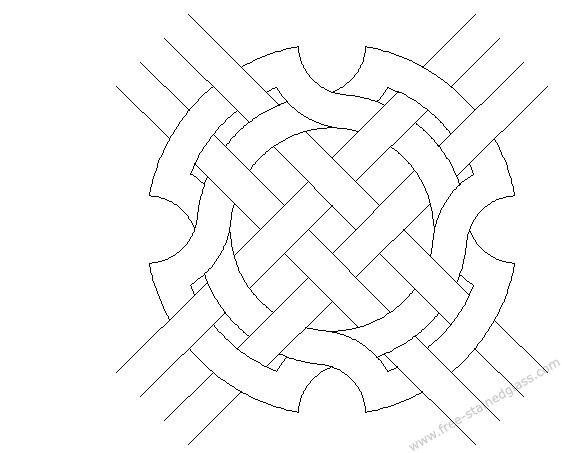
In contemporary times, both stained glass and mosaic art have experienced revivals, finding new expressions beyond traditional religious contexts. Stained glass has been integrated into modern architecture, with artists experimenting with abstract designs and incorporating materials like fused glass. Notably, Judson Studios in Los Angeles has pioneered large-scale fused glass installations, blending traditional craftsmanship with modern technology.
Mosaics have also found renewed popularity, adorning public spaces like subways, parks, and urban installations. The London School of Mosaic, for instance, has been instrumental in promoting mosaic art through education and public commissions. Modern artists often incorporate unconventional materials—such as recycled glass, beads, and found objects—into their mosaics, reflecting contemporary themes and environmental consciousness.
The enduring appeal of stained glass and mosaic art lies in their ability to transform spaces through color, light, and texture. From ancient temples to modern urban landscapes, these art forms continue to captivate and inspire, bridging the past with the present. Whether through the luminous glow of a stained-glass window or the intricate patterns of a mosaic, they offer a timeless testament to human creativity and expression.